


 Kan Dail
Are you a German speaker eager to dive into Korean? Or maybe a Spanish speaker curious about learning French? No matter your starting point, one thing’s for sure – learning a new language can feel a bit overwhelming, especially if you’re doing it alone.
That’s where some of the best communication apps come in. These tools make language learning more interactive by connecting you directly with native speakers. Instead of memorizing grammar rules in isolation, you’re picking up the language in real conversations – which is not only effective but genuinely fun.
The beauty of these platforms is in the exchange: you help someone practice your native language while they help you with theirs. It becomes less of a chore and more of a shared cultural experience – and who knows, you might even make a few new friends along the way.
Of course, while these apps are great for practice, structured platforms like Ling App can provide a solid foundation in grammar and vocabulary. Pairing the two gives you the best of both worlds: formal instruction and casual conversation.
Here’s a list of the top communication apps we recommend to jumpstart your language journey:
1. HelloTalk
HelloTalk is is a language exchange app developed in China that connects users who want to learn and teach different languages through conversation.
It’s especially helpful for beginners thanks to built-in tools like text to speech, speech-to-text, and translation support. Even if you’re not fluent, you can still help others while learning yourself. Communication happens through text, voice messages, and even video call.
HelloTalk also includes a “Moments” feature, which works like a social feed where users can share updates and interact with others, creating a more community-driven experience.
While the app is designed for learning, users should be cautious. Some treat it more like a dating app than an educational tool. The platform includes block and report options, so it’s important to use those when necessary.
2. Tandem
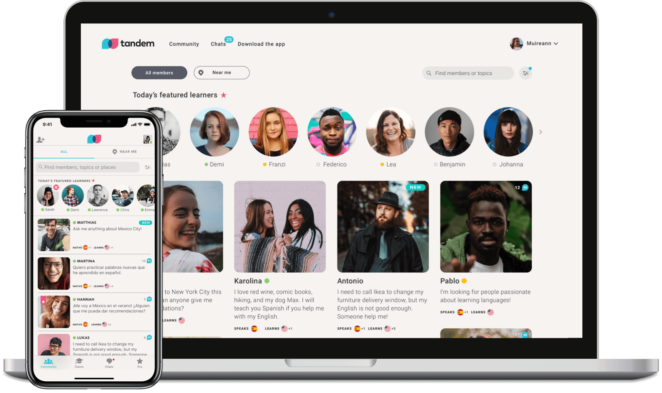
Tandem combines language learning with a social media-style experience. You can follow people, send positive feedback, leave reviews, and get to know others through their profiles. The app includes privacy settings that let you control who can contact you.
At its core, Tandem is a messaging app built for language exchange. You can text, send voice messages, make video calls, or share images. There’s also a translation tool to help conversations flow more easily.
A standout feature is access to certified language tutors, which gives you the option to book lessons if you want more structured help.
As with similar platforms, not everyone uses the app as intended. Some users may approach it with other motives. Fortunately, Tandem includes block and report functions to help keep your experience safe and focused on learning.
3. HiNative
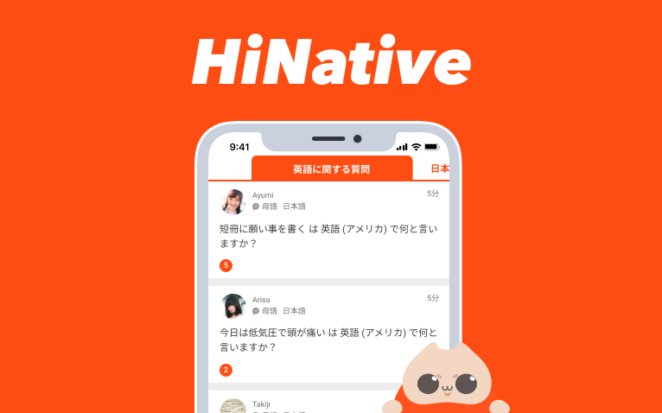
HiNative is a Q&A platform that connects language learners with native speakers around the world. If you’ve ever struggled with awkward translations or phrases that don’t make sense through tools like Google Translate, this app can help.
You can ask questions using pre-set templates such as “How do you pronounce this?” or “What does this mean?” to get more accurate and helpful answers. The app also lets you upload voice recordings so native speakers can give feedback on your pronunciation and accent.
HiNative works both ways. While you get help with your target language, you can also answer questions about your own language. It’s a quick, low-effort way to support others while learning.
The basic features are free, but a subscription unlocks extras like an ad-free experience and priority responses.
4. Meetup
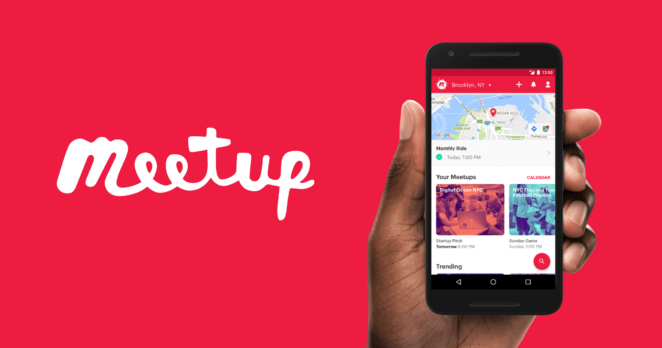
Meetup is not a language learning app but a community platform where people connect based on shared interests. Language exchange is one of the more active categories.
You can join local groups that meet in person to practice speaking a language. These meetups often happen in casual settings like cafés or public spaces. Practicing face-to-face helps build confidence and improves fluency.
Some groups are focused on cultural exchange. You may meet native speakers or people who are interested in the same culture. Be respectful when joining and engaging with these communities.
Because interactions happen in real life, the connections you make are often more meaningful. The platform also has fewer issues with misuse compared to some chat-based apps.
For In-Person Support That Goes Beyond Practice
Meetup is useful for casual language practice, but some situations call for clear and accurate communication with no room for error. This includes healthcare visits, legal settings, business meetings, and public services.
In these cases, it’s best to work with a professional. Elmura Linguistics’ expert onsite interpreters
provide in-person language support for environments where precision matters. They help ensure both parties understand each other fully, without relying on casual conversation skills or translation apps.
This is not a language learning tool. It is a service for when accuracy and trust are essential.
To Wrap It Up
Language learning doesn’t have to rely on textbooks or solo study. Apps like HelloTalk, Tandem, HiNative, and Meetup give you access to real conversations with real people. Each platform offers a different way to build confidence and improve fluency through interaction.
For casual practice, these tools work well. For more structured learning, platforms like Ling App can help reinforce grammar and vocabulary.
Choose the method that fits your needs, stay consistent, and keep practicing.