


 Alana Harrington
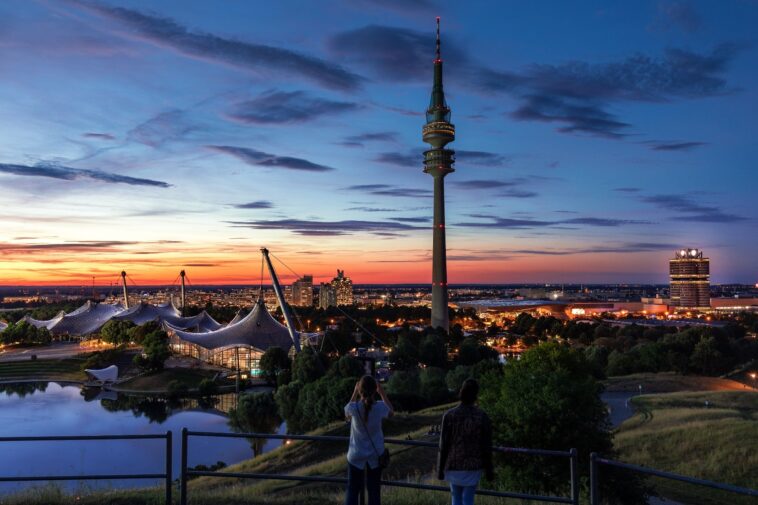
Munich is famous for precision, order, and beer gardens, but what surprises most first-time visitors is how alive the city becomes after midnight.
Beneath the polished Bavarian surface, Munich has a parallel world built around students, artists, night workers, and late-hour wanderers who prefer dim lights, side streets, and small venues that only open when the regular crowd goes home.
The most accurate way to describe Munich’s real nightlife is simple: the city sleeps early, but the people who create its culture do not.
Where Munich Actually Comes Alive After Midnight: A Quick Map
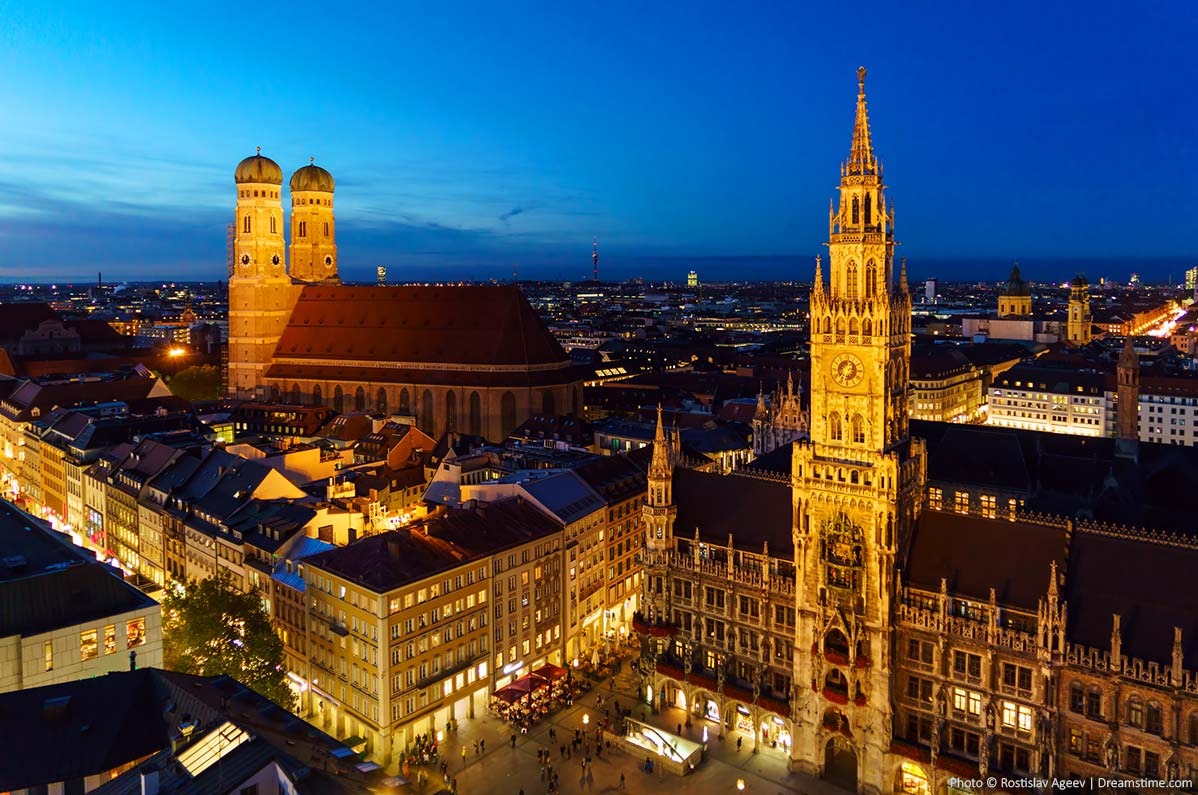
The city’s nightlife fractures into several late-hour clusters:
- Maxvorstadt – The student heart, packed with university buildings, street bars, and cafés that stretch their operations until early morning when exam season hits.
- Glockenbachviertel – Creative quarter with queer-friendly venues, stylish bars, late eateries, and small clubs that don’t set real closing times.
- Schwabing – A long, bohemian corridor with art studios, hidden bars, student apartments, and decades of counterculture history.
- Haidhausen – More relaxed, with small wine bars and music corners where musicians and night workers end their shifts.
- Bahnhofsviertel – The rawest, most mixed after-hours zone. Here, traditional nightlife overlaps with alternative services, late restaurants, and social nightlife that doesn’t switch off until dawn.
These districts are connected by trams and night buses that run surprisingly reliably even at 4 a.m. Munich’s night trails form a loop rather than a single destination, which is exactly why people hop from one area to the next instead of staying in one bar all night.
Maxvorstadt – Munich’s True Student Engine After Dark
Maxvorstadt keeps the city youthful. Every university building pours students out into the streets by evening, and many don’t head home until early morning.
During exam months, cafés extend their hours, bars stay half-full until sunrise, and outdoor seating becomes a series of improvised study sessions mixed with street chatter.
Why does this area never fully shut down
Students move in waves. Some finish late internships, others work evening shifts, and many study in cafés because dorm rooms are cramped.
This creates a constant background activity that keeps food places and bars operating well past their official closing times.
You see people grabbing 1 a.m. döners, taking laptop breaks on the sidewalk, or squeezing into small bars that play indie music at a volume low enough to permit conversations.
Typical late-night spots students rely on:
| Place Type | What Happens There After Midnight | Why It Stays Active |
| Copy shops & print stations | Lines of students printing thesis drafts at 1–3 a.m. | Exam pressure |
| Street food corners | Full of international students | Cheap meals & socializing |
| Café-bars | Slow music, dim lights, people working or chatting | Hybrid spaces |
Maxvorstadt is where Munich feels radically different from its “organized and conservative” stereotype. It is noisy, chaotic, multilingual, and filled with ideas in motion.
Glockenbachviertel – Creative, Fluid, and Awake Until Dawn
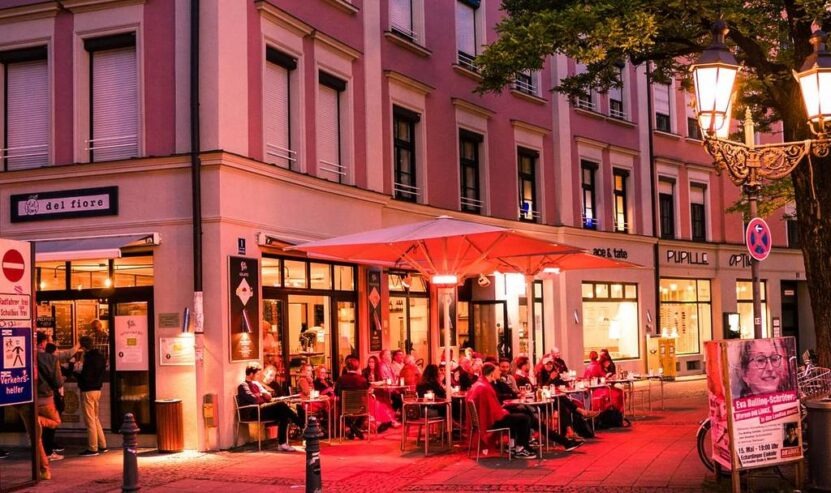
If Maxvorstadt is the brain, Glockenbachviertel is the pulse. This is Munich’s creative district: designers, musicians, photographers, students from the arts academy, and night-shift workers all meet here.
The area is packed with narrow streets, relaxed bars, and club-style rooms that open spontaneously depending on the night.
What makes Glockenbachviertel unique
The rhythm is fluid. One bar closes at 2 a.m., another opens a private basement room at 2:15 a.m., and a third turns into a mini-dance floor at 3 a.m.
A single night can take you through multiple micro-scenes: disco, queer pop, soft techno, acoustic sets, and creative meetups around old wooden tables.
A look at typical late-night patterns
| Time of Night | What You Usually See |
| Midnight | Full terraces, crowds spilling into sidewalks |
| 2 a.m. | Bars calm down, but small clubs heat up |
| 3–5 a.m. | Private gatherings, music collectives, and basement parties |
| 5–7 a.m. | Sunrise walks along the Isar, last drinks, breakfast spots open |
Glockenbachviertel is also a place where alternative lifestyle services and nightlife blend naturally. You’ll find communities, performance art circles, and nightlife tailored to adults.
In this context, some travelers and locals explore more discreet companionship services common to big European nightlife hubs.
In the broader Munich nightlife ecosystem, one such resource is Louisa Escort, mentioned here simply because this neighborhood is where many adults seek personalized social company during longer nights.
It exists as part of the overall nightlife fabric, the same way late cafés and private gigs do, not as promotion but as a realistic reflection of how night culture operates in this part of the city.
Schwabing – The Bohemian Strip With Eternal Creative Energy
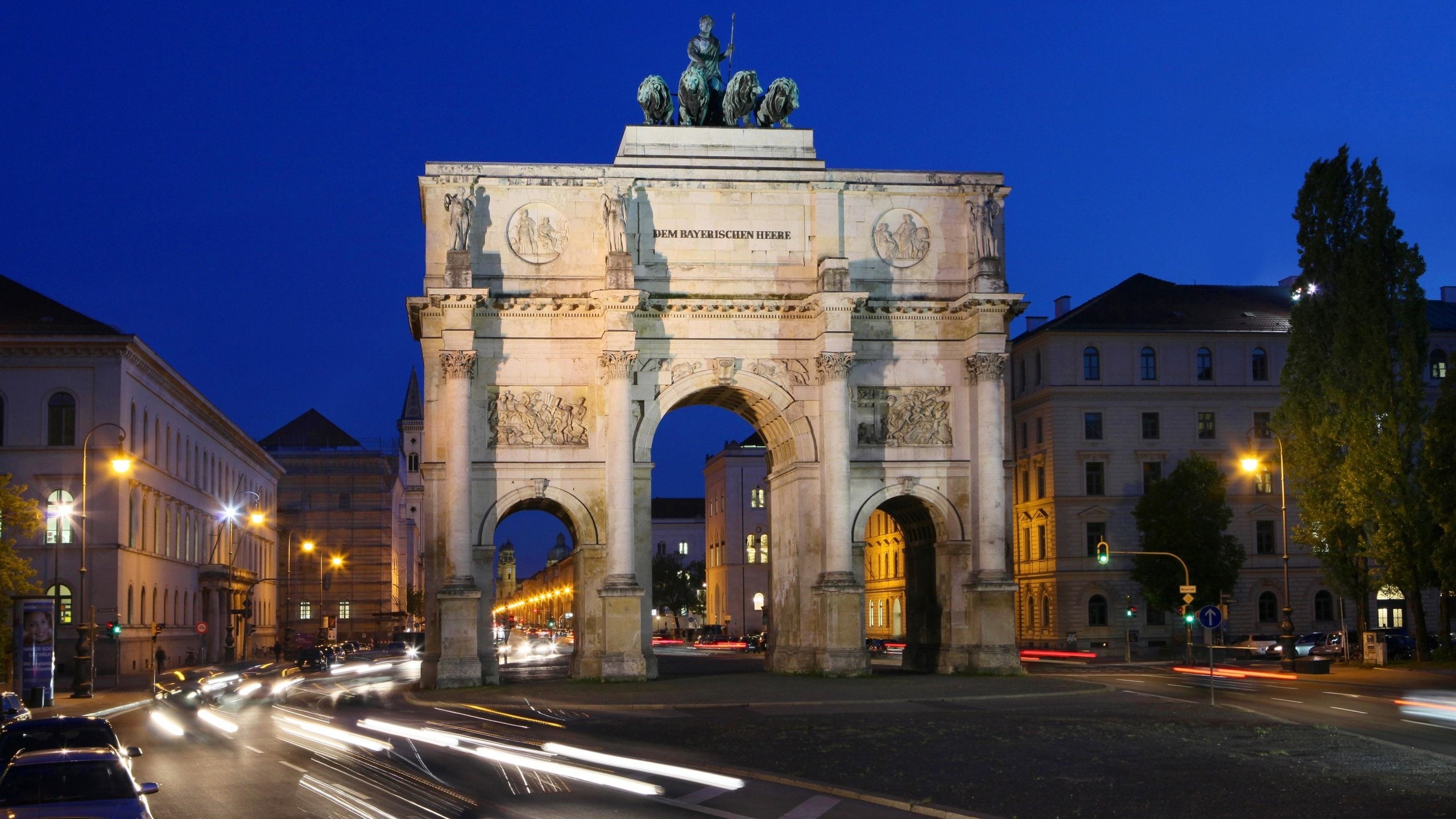
Schwabing has deep historical weight. Long before Munich became a tech city, this was the epicenter of German bohemian life, where artists, poets, political dissidents, musicians, philosophers, and students all lived.
The vibe remains in the vintage storefronts, art ateliers, jazz corners, and balconies filled with plants and cigarette smoke.
Why does Schwabing go late?
Schwabing isn’t loud; it stretches long. Nights here don’t explode; they simmer. You wander from live jazz to small literary bars, then to a friend’s studio where people sit on the floor talking about art and music over cheap wine.
The movement is horizontal across many stops rather than vertical toward one big party.
The district’s long avenues and residential streets mean that nightlife is woven into everyday life, not tucked away.
People step out for a drink at midnight, return home at 1, go back out at 2, and meet someone at 3 for a walk to the university gardens.
Haidhausen – Where Musicians and Night Workers End Their Nights
Haidhausen is quieter but deeply nocturnal in a different way. It’s home to musicians, bar employees, freelancers, and hospitality staff who finish work late. When the city is asleep, they gather in wine bars, small restaurants, and dim cafés that treat 2:30 a.m. as normal operating time.
A more intimate nightlife
The vibe here is calmer: soft conversations, dim streetlights, jazz floating from small windows. Many creative workers prefer Haidhausen because it feels like a neighborhood, not an entertainment zone. It’s more personal, more consistent, and ideal for people who want to rest and socialize after midnight rather than party.
Bahnhofsviertel – Munich’s Raw and Mixed After-Hours Zone
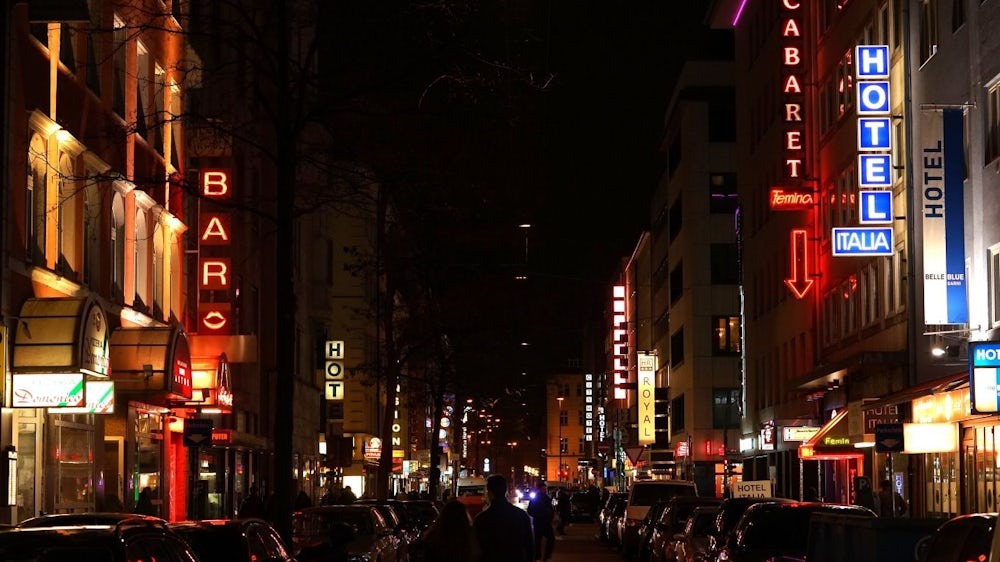
Bahnhofsviertel is the most misunderstood district in Munich. Yes, it’s raw, but it is also the most honest representation of a European central-station ecosystem: multicultural food stalls, late restaurants, underground clubs, bars that open only at 3 a.m., and adult nightlife that blends into the street’s rhythm.
This is where people end up after the rest of the city closes. Night-shift workers, travelers, hotel guests, creatives, and partygoers all mix here.
The food alone is worth the trip, noodles at 4 a.m., Turkish grills, ramen stalls, and small Asian eateries that stay open until sunrise.
Bahnhofsviertel is not for everyone, but it is always awake, making it the anchor of any Munich night trail.
Why Munich’s Night Trails Feel Different From Other European Cities
Munich’s nightlife isn’t as wild as layered. Instead of one massive nightlife cluster, the city offers several smaller zones that blend into each other through long trams, safe streets, and consistent public transport.
This creates a unique experience: nights feel like journeys, not fixed events.
What shapes the city’s nocturnal culture
| Factor | Impact |
| Student density | Keeps cafés and bars open past midnight |
| Creative economy | Generates basement gigs, art events, micro-parties |
| High safety level | Allows night walkers to move between districts |
| Public transport | Night trams create mobility for bar-hopping |
| Multicultural population | Gives diversity in food, music, and atmosphere |
Munich manages to be clean and orderly during the day, yet spontaneous and unstructured at night. That duality is what makes it interesting.
A Realistic Guide for Experiencing Munich Until Dawn
Walk Instead of Planning
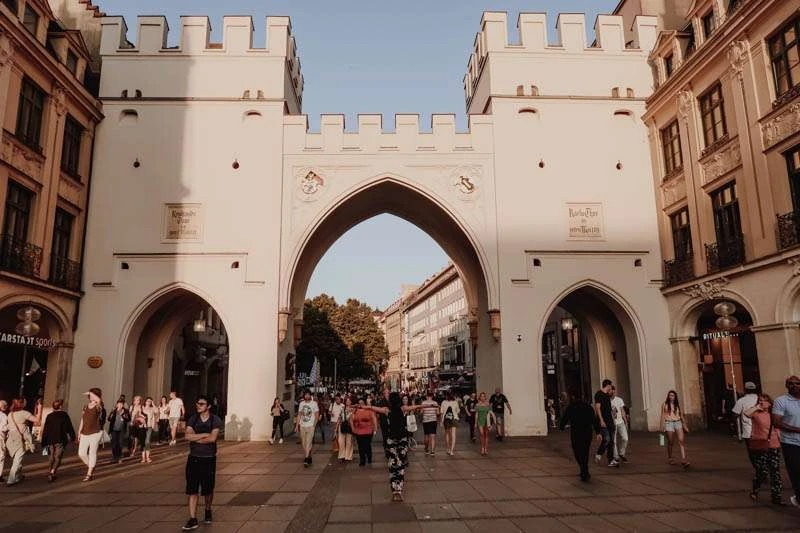
The districts are close enough for night walks. You feel the city changing block by block: student chatter becomes soft jazz, then street food noise, then the pulsing beat of a basement club.
Mix Student and Creative Zones
Start in Maxvorstadt, drift to Schwabing or Glockenbachviertel, then finish in Bahnhofsviertel. This mirrors how locals actually spend a long night.
Don’t Expect a Single “Big Nightclub Capital”
Instead of giant clubs, Munich offers curated small experiences that reward wandering.
Conclusion
Munich’s nocturnal life is less about flashing lights and more about drifting through neighborhoods that each carry a different energy.
Students anchor one end of the city’s night rhythm, creative clusters maintain another, and the old bohemian spirit still runs underneath it all.
Follow the paths that students, artists, night-shift workers, and travelers take, from Maxvorstadt to Schwabing, Glockenbachviertel to Haidhausen, ending in Bahnhofsviertel, and you experience the real Munich that stays awake long after the respectable lights go out.
