

 Nina Smith
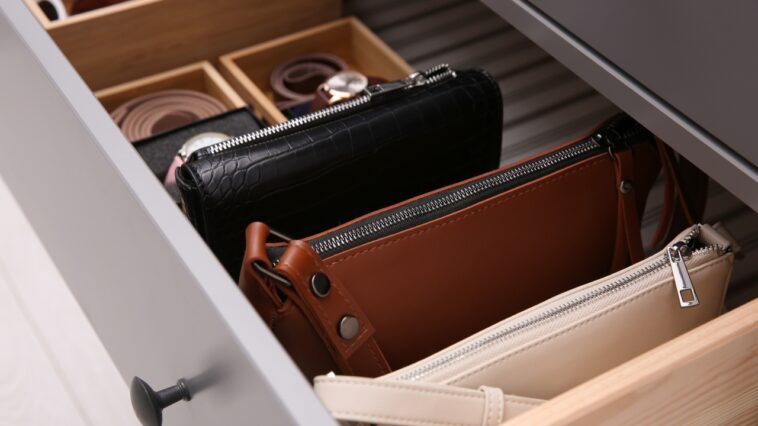
The best way to store leather goods when they are not in use is simple: keep them clean, dry, cool, dark, gently supported, and able to breathe.
A leather bag shoved flat under a bed, a jacket sealed in plastic, or boots left beside a radiator can age faster in storage than during regular wear.
Good storage protects leather from slow damage: shape loss, mildew, fading, cracking, sticky finishes, and metal stains.
Conservation guidance from the Canadian Conservation Institute and the National Park Service points toward the same main idea: prevention matters more than rescue work for leather and skin materials.
Start With a Clean, Dry Surface
Leather should never go into storage dirty or damp. Dust, skin oils, salt, food residue, makeup, and city grime can settle into seams and textured grain. Over time, grime attracts moisture, pests, and staining.
For most finished leather bags, wallets, belts, jackets, and shoes, start with a soft dry cloth. If needed, use a barely damp cloth on finished leather only, then let the item air-dry fully away from heat.
Suede, nubuck, unfinished leather, painted leather, patent finishes, and vintage pieces need more caution. A suede brush or a clean soft brush is usually safer than water.
Never store leather after rain without drying it first. Open a wet bag, remove contents, blot moisture with an absorbent towel, and leave it in a ventilated room.
Do not use a hair dryer, radiator, sunny window, or hot airing cupboard. Fast heat can harden leather and warp panels.
Keep Humidity in the Safe Middle
Humidity causes many storage problems. Too much moisture raises the risk of mold. Too little moisture can leave leather stiff and brittle.
Sharp swings also matter because leather can shrink, swell, distort, or tear as it gains and loses internal moisture.
The National Park Service notes that museum humidity parameters for leather and skin objects are often 40% to 60% relative humidity, with tight control over daily and annual fluctuations.
The Library of Congress gives a 30% to 50% relative humidity range for preserving family heirlooms, while the EPA recommends indoor humidity below 60%, ideally 30% to 50%, to limit mold risk.
For home storage, aim for steady indoor conditions rather than perfect laboratory control. A small digital hygrometer in a closet or storage room is cheap and useful.
| Storage Factor | Good Home Target | Warning Sign |
| Relative humidity | Around 40% to 55% | Musty smell, white or green specks |
| Temperature | Cool room temperature | Heat from vents, radiators, attic air |
| Light | Dark or very low indirect light | Fading, uneven color, dry patches |
| Airflow | Gentle air movement | Stale smell inside bags or boxes |
| Support | Natural shape retained | Creases, collapsed corners, flattened boots |
Choose the Right Place in the Home
A bedroom closet usually beats a basement, attic, garage, laundry room, or bathroom. Leather prefers boring storage.
No dramatic heat. No damp air. No bright sun. No leaking pipes nearby.
The Library of Congress advises keeping heirlooms off the floor, away from leak-prone areas, heaters, vents, and direct light, while also limiting dust, smoke, air pollution, and fumes.
It also warns against storage in attics, basements, and garages.
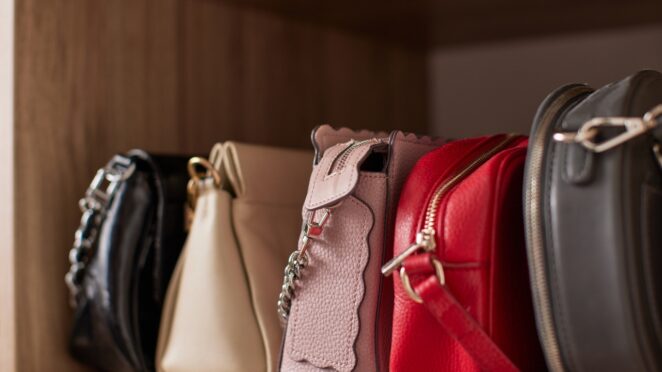
Good home spots include a clean wardrobe shelf, a breathable storage box in a main living area, a coat rail with space between garments, or a shoe cabinet with airflow.
Avoid stacking heavy items over leather. Weight creates deep folds, and leather can remember pressure for a long time.
Store Bags So They Keep Their Shape
A quality leather bag should rest in its natural shape. Empty it first. Receipts, pens, lip balm, coins, snacks, and old keys can leave marks, stains, or dents.
Open each pocket and check the lining before storage.
View this post on Instagram
For full-grain bags from brands such as Grainmark Leather, that pocket check matters because pens, keys, chargers, and loose coins can leave pressure marks inside a structured leather piece.
Stuff the main compartment lightly with acid-free tissue paper, plain unprinted packing paper, or clean soft cotton.
The goal is gentle support, not pressure. Overstuffing can stretch seams and distort the profile.
Avoid newspapers because the ink can transfer. Avoid colored tissue because dyes may bleed in humid air. Avoid plastic grocery bags because they trap moisture and can leave creases.
The Canadian Conservation Institute notes that three-dimensional leather and skin items, such as bags, shoes, gloves, garments, and similar pieces, can become compressed, creased, or deformed without internal and external supports.
Its guidance favors padding, boxes, trays, and shaped supports that preserve form without creating tension.
For structured handbags, fasten the hardware gently, tuck the straps inside or lay them along the side, and place the bag upright in its dust bag.
For soft leather totes, avoid hanging by the handles during long storage. Hanging loads on the straps can stretch the attachment points.
Give Jackets, Shoes, and Boots Proper Support
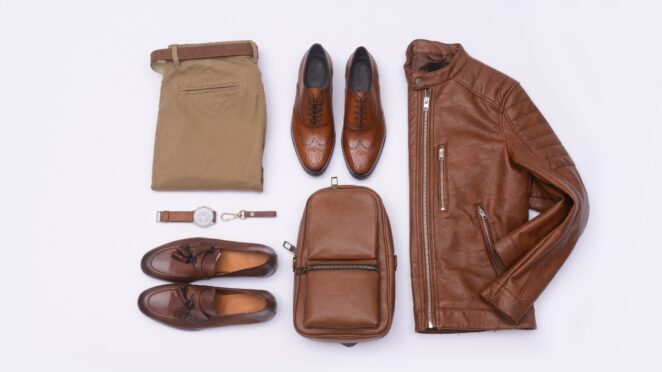
Leather jackets need broad support across the shoulders. Thin wire hangers create peaks, creases, and stress points. Use a wide, padded, or well-shaped wooden hanger that matches the jacket’s shoulder width.
Zip or button the jacket before storage so the front panels hang evenly. Empty the pockets because heavy objects can stretch the lining and pull the leather out of shape.
Leave space between garments so air can move, and skip dry-cleaner plastic. A breathable cotton garment bag is better for seasonal storage.
Shoes and boots need the same logic. Clean the soles, let the footwear dry at room temperature, then use cedar shoe trees for many dress shoes if the fit is not too tight.
For delicate or vintage shoes, acid-free tissue may be safer. Tall boots need shaft support from boot shapers, rolled acid-free paper, or clean cotton inserts.
Keep Light Away From Leather
Sunlight and strong artificial light can fade leather unevenly. Dyed, painted, smoked, and older leathers are more vulnerable.
The Canadian Conservation Institute says light and ultraviolet exposure can fade colorants and can also weaken and embrittle the collagen structure over time.
Its storage advice includes keeping sensitive items in the dark, such as in opaque containers.
A sunny shelf may look attractive for a display bag or pair of boots, but a color change can show up as a pale side, a darker strap underside, or a shadow line where one area was protected.
Store valuable pieces away from windows.
Avoid Sealed Plastic and Heavy Product Use
Leather needs protection, but sealed plastic is usually a poor long-term answer. Airtight plastic can trap humidity from leather that is not fully dry. It can also encourage musty smells, condensation, and finish problems.
Better options include cotton dust bags, acid-free boxes, unbleached muslin covers, or breathable garment bags.
Plastic bins can work only when the room is dry, the leather is fully dry, and the lid is not creating a damp microclimate.
Conditioning before storage depends on the leather type and condition. A smooth-finished leather item that feels dry may benefit from a small amount of a compatible conditioner, tested first on a hidden area.
A healthy bag or jacket does not need a heavy layer of product before every season.
Conservation sources are cautious about routine chemical treatments. The National Park Service discourages routine saddle soap and leather dressings for historic leather, noting risks such as darkening, biological attack, surface residues, dust attraction, and future treatment problems.
Check Stored Leather Every Few Months
@theericatales Some products perfect for cleaning your leather bags! Leather is one of the most durable materials out there but it does need some proper care. Some additional tips to storing your bags after cleaning: 1. Moisture Defense: Introduce silica gel or small disposable dehumidifiers to ward off future moisture. Ideal for large closets, these safeguards ensure your bags stay dry and mold-free. 2. Box-Free Storage: Avoid storing your bags in boxes, as limited air circulation can lead to moisture accumulation over time. Opt for breathable cotton dust bags—they promote air flow, although periodic checks are crucial to prevent mold growth. 3. Rotation Routine: Break the mold (literally) by rotating your bags. Spending prolonged periods at home can contribute to mold issues. Rotate your bags at least once a month—this simple act, like changing out the dustbag, can make a significant difference. 4. Leather Love: Nourish your leather. Utilize recommended products like Collonil or opt for the cost-effective Ilog Maria alternative. Regular moisturizing not only prevents dryness but also safeguards against mold buildup 5. Spray with a waterproofer like the collonil 1909 Supreme Protect Spray. Waterproofing forms a layer of protection from liquids which is the cause of moisture. Because of this protective layer, it also makes it easier to clean later on even if molds recur. Just make sure that the waterproofer one is using is not water-based. 6. If all else fails, bring your bag to a bag spa and let the experts help you out! Hope these tips help! All products are linked in instagram story highlights under “Bag Care”. #leatherbags #collonil #bagcare ♬ original sound – The Handbag Tales (2nd acct) – theericatales
Storage is not a one-time task. A quick inspection every 2 or 3 months can catch problems early.
The Canadian Conservation Institute warns that relative humidity above 65% favors mold on leather, skins, furs, and parchment, and poor air circulation increases outbreak risk. It also notes that warm, moist conditions can darken, stiffen, and embrittle vegetable-tanned leather. If mold appears, isolate the item from other goods. Do not brush mold indoors near clean leather. For valuable, sentimental, antique, suede, or unfinished pieces, contact a professional conservator or a reputable leather-care specialist. A bag resting for 2 weeks needs less preparation than a leather jacket stored until next winter. Match the storage method to the time frame. Long-term storage rewards restraint. More product, tighter wrapping, and more compression rarely help. Clean conditions, stable air, and soft support do far more. The best storage routine for leather is calm and consistent: clean it, dry it, support it, cover it with breathable material, and keep it in a cool, dark, stable room. Leather lasts longer when storage reduces stress instead of adding pressure, moisture, heat, or chemical buildup.
Short-Term Storage Versus Long-Term Storage
Time Away From Use
Storage Method
A few days
Keep clean, dry, and away from direct sun
A few weeks
Use a dust bag, light support, and a ventilated closet space
One season
Clean first, support shape, use breathable cover, check humidity
6 months or longer
Add careful padding, inspect regularly, and avoid risky locations
FAQs
Summary