


 Nina Smith

Singapore’s property market is famously resilient, and one segment that consistently draws investor attention is the condominium rental sector. With limited land supply, strong demand from expatriates, and a stable political and economic climate, the city-state offers a fertile ground for investors seeking steady returns.
But not all areas perform equally. Some neighborhoods deliver stronger rental yields thanks to a mix of lifestyle convenience, proximity to business hubs, and evolving urban planning.
Let’s explore the top districts where condominiums tend to deliver robust rental returns, along with what drives those numbers and what types of tenants each area attracts.
Why Rental Yield Matters for Condo Investors
Rental yield measures how much rental income a property generates relative to its purchase price, typically expressed as a percentage. It’s one of the clearest indicators of return on investment for landlords.
Example calculation:
| Item | Example |
| Monthly Rent | SGD 4,500 |
| Annual Rent | SGD 54,000 |
| Property Price | SGD 1,300,000 |
| Rental Yield | (54,000 ÷ 1,300,000) × 100 = 4.15% |
A healthy yield in Singapore generally falls between 3% and 5%, though it varies by location and property type. Areas with newer transport links, nearby commercial zones, and lifestyle amenities tend to push yields toward the higher end.
For condo investors aiming at yield, checking out Pinery Residences offers a concrete example of how location and amenities can align.
District 1: Marina Bay and Raffles Place
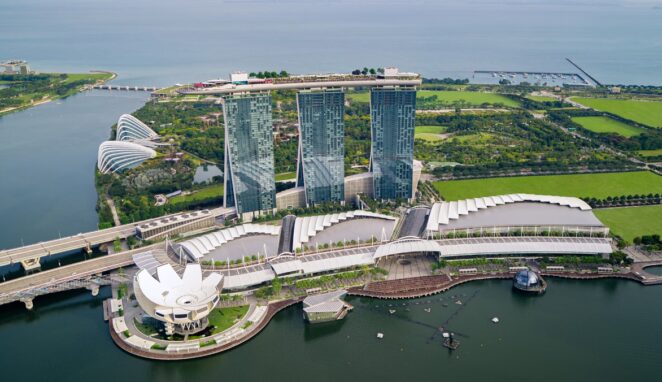
For professionals working in Singapore’s Central Business District, convenience is everything. Marina Bay and Raffles Place are synonymous with corporate prestige, and their skyline of luxury condominiums caters to tenants who prioritize location and lifestyle over price.
Why It Performs Well
- Steps from major office towers like One Raffles Quay and Marina Bay Financial Centre
- Excellent MRT access through Downtown, Raffles Place, and Marina Bay stations
- Surrounded by high-end retail and dining at Marina Bay Sands and The Shoppes
In District 1: Marina Bay and Raffles Place, you’ll also find mention of the development at Narra Residences, positioned for those seeking a central-luxury rental option.
Typical Tenant Profile
Bankers, expats in senior management, and business travelers often opt for short- to medium-term leases here. Many prefer fully furnished apartments, creating opportunities for landlords who can offer premium turnkey options.
Average Rental Yields
- High-end units: around 3%
- Smaller one-bedrooms: up to 4.5% due to high demand from singles and couples
Investors who focus on compact layouts often outperform those with large three-bedroom units in this district.
District 2: Tanjong Pagar and Anson
Tanjong Pagar blends heritage charm with modern high-rise living. It’s one of the few city-center neighborhoods where shophouses coexist with skyscrapers, giving it character that appeals to both locals and foreign tenants.
What Keeps Yields Competitive
- Walkable distance to the CBD yet quieter than Marina Bay
- Ongoing rejuvenation under the Greater Southern Waterfront plan
- Lifestyle perks like Maxwell Food Centre, Duxton Hill bars, and boutique gyms
Ideal Tenant Base
Young professionals and small families looking for a work-life balance. They value proximity to offices but want a neighborhood that still feels livable after dark.
Market Snapshot
Smaller condos like Icon, Altez, or Skysuites@Anson command strong rents.
Typical yields hover around 3.8% to 4.3%, boosted by the neighborhood’s dual identity as both residential and commercial.
District 3: Queenstown and Alexandra
Just outside the downtown core, Queenstown and Alexandra offer a rare blend of accessibility and affordability. The area’s maturing infrastructure and proximity to One-North and the CBD make it a rental hotspot.
Why Investors Look Here
- MRT connectivity via Queenstown, Redhill, and Commonwealth stations
- Near employment nodes like One-North, Mapletree Business City, and the biomedical cluster
- Attractive to tenants priced out of city-center districts
Typical Yields
Between 3.8% and 4.5%, depending on project age and proximity to transport.
Developments like Commonwealth Towers, The Anchorage, and Stirling Residences are well-known for consistent occupancy.
Tenant Demographics
Mostly mid-level executives, foreign employees in tech and research sectors, and local families seeking shorter commutes.
District 5: Clementi, West Coast, and One-North
District 5 has evolved into one of Singapore’s most dynamic rental zones. The presence of research institutes, universities, and startups has created a constant stream of tenants who prioritize proximity to work and education.
Core Drivers
- Home to the National University of Singapore (NUS) and Singapore Polytechnic
- Thriving innovation ecosystem in One-North (Fusionopolis, Biopolis, Mediapolis)
- Good expressway access via AYE and West Coast Highway
Rental Performance
Yields typically range from 4% to 5%, among the highest in the west. Compact two-bedroom units near One-North or NUS command stable rents year-round.
Tenant Mix
Academics, researchers, and professionals in biotechnology, IT, and media. Long-term rental contracts are common, providing income stability for investors.
District 8: Farrer Park and Little India
Farrer Park is emerging as a high-yield favorite thanks to its strategic location near the city fringe and more approachable property prices.
The area’s cultural depth and strong transport links make it a magnet for both expatriates and locals.
Why It Stands Out
- 5-minute MRT ride to Orchard or Dhoby Ghaut
- New developments like Uptown @ Farrer modernize the skyline
- Surrounded by amenities: Mustafa Centre, City Square Mall, and medical clinics
Yields and Tenant Profile
Rental yields often exceed 4.5%, with smaller apartments seeing the most activity.
Tenants include healthcare workers, young couples, and professionals who prefer value-for-money locations near the city core.
District 14: Paya Lebar, Eunos, and Geylang
The eastern fringe has long been a rental yield powerhouse. While Geylang’s image used to deter some investors, urban renewal and the Paya Lebar commercial transformation have changed the landscape.
Why the East Appeals
- Strong connectivity via Paya Lebar MRT interchange (Circle and East-West lines)
- Growing business hub around Paya Lebar Quarter (PLQ)
- Affordable entry prices compared to central districts
Typical Yields
- Average yield: 4.5% to 5%
- Smaller units in Geylang can push slightly higher, especially for well-maintained new builds
Tenant Mix
A broad range: airline staff, young professionals, and expatriates from neighboring Asian countries who value easy airport access and competitive rent.
District 15: East Coast and Katong
East Coast has long been one of Singapore’s most beloved residential zones, and rental yields remain healthy thanks to the area’s reputation for comfort and lifestyle quality.
Key Strengths
- Near East Coast Park and Katong’s food scene
- The upcoming Thomson-East Coast MRT line will boost accessibility
- Mix of freehold and leasehold condos appealing to diverse investors
Performance Snapshot
Rental yields average around 3.5% to 4%, but units near the new MRT line and Katong eateries perform above average.
Projects like Amber Park and Seaside Residences have proven especially popular among expats.
Tenant Base
Predominantly expatriate families, airline crew, and professionals seeking a slower pace without losing access to the city.
District 19: Hougang, Sengkang, and Serangoon
District 19 is an evolving region that combines large-scale residential development with expanding infrastructure. The relative affordability of condos here makes it a strong performer in rental yield percentages.
Why It’s Attractive
- Easy access via the North-East Line and major expressways (CTE, KPE)
- Emerging community hubs and malls like NEX and Compass One
- Competitive entry price for landlords compared to central regions
Yield and Tenant Details
Yields generally hover around 4%, with newer projects like The Florence Residences and Affinity at Serangoon delivering consistent interest.
Tenants include young families and professionals working in the northeast or central business areas reachable by MRT.
District 22: Jurong East and Lakeside
Jurong has been repositioning itself as Singapore’s “second CBD.” With a major transport interchange and future developments under the Jurong Lake District masterplan, it’s no surprise the area shows strong rental resilience.
What Drives Performance
- Cluster of commercial centers: JEM, Westgate, and IMM
- Close to educational institutions and healthcare hubs
- Anticipated growth from upcoming business districts and transport links
Yields and Property Outlook
Typical yields are 4% to 4.6%, especially for mid-sized apartments. With more offices and mixed-use developments planned, rental demand is expected to remain steady.
Tenant Base
Professionals employed in science parks, healthcare, and education, along with families seeking suburban convenience.
District 27: Yishun and Sembawang
Farther north, yields remain solid thanks to lower property prices and improving connectivity. Yishun and Sembawang may not have the glamour of downtown districts, but they make up for it with practicality and stability.
Why Investors Consider It
- Competitive property prices offer entry-level investment opportunities
- Strong community infrastructure with malls, schools, and MRT lines
- Increasing appeal among younger families
Yields
Rental yields hover between 4.2% and 4.8%, particularly for smaller two-bedroom layouts.
Projects like North Park Residences have shown that well-integrated developments with malls and transport nodes attract consistent tenants.
Closing Thoughts
Strong condo rental yield in Singapore doesn’t just come from headline locations. It comes from understanding how tenants move, what drives convenience, and where infrastructure and commerce are growing next.
Districts like One-North, Paya Lebar, and Queenstown continue to punch above their weight, while affordable areas like Yishun and Jurong show that consistent returns don’t always require a luxury address.
Investors who focus on fundamentals: connectivity, tenant needs, and upkeep, tend to enjoy not only higher yields but steadier occupancy. In a market as competitive and tightly regulated as Singapore’s, informed positioning makes all the difference.
