


 Nina Smith
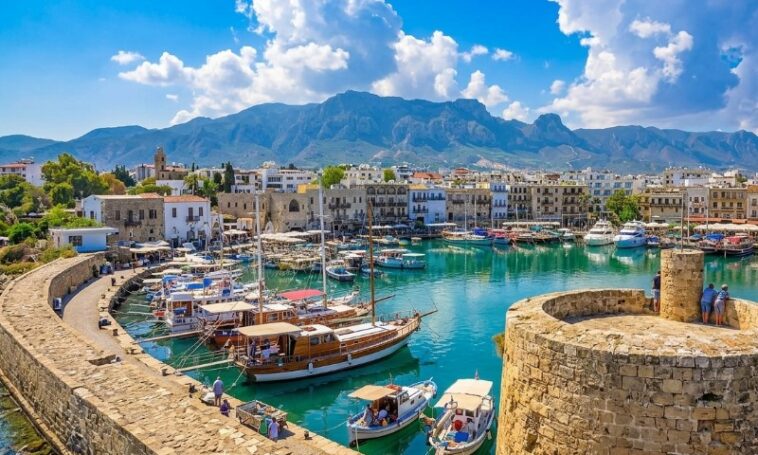
Many people choose a Cyprus city based on beaches, property prices, or memories of a good vacation.
That can lead to a poor fit once daily life begins.
Cyprus may be compact, but daily life in Larnaca, Paphos, and Nicosia can feel very different.
Lifestyle fit matters more than first impressions. Useful questions include:
- Do you want the sea nearby every day?
- Do you want a slower retirement pace?
- Do you need career and business opportunities?
- Do you care most about family infrastructure?
- Do you need lower housing costs?
- Do you want a year-round social life?
Cyprus attracts people with warm weather, beaches, history, and a Mediterranean pace of life.
It has around 300 days of sunshine per year, and Larnaca and Paphos rank among its most visited cities.
Still, sunshine alone does not decide which city fits your ordinary Tuesday.
| Lifestyle Priority | Best City | Why |
| Daily beach access | Larnaca | Finikoudes, Mackenzie, and Kastella make beach life easy. |
| Nature and scenery | Paphos | Akamas, Coral Bay, Lara Beach, and wine villages offer stronger outdoor appeal. |
| Career access | Nicosia | Most institutions, banks, law firms, universities, and offices are in the capital. |
| Retirement pace | Paphos | Slower routines, scenery, and established expat circles make settling easier. |
| Budget coastal living | Larnaca | Lower living costs and listed property prices make it the best-value coastal choice. |
| Family practicality | Larnaca | Beaches, schools, clinics, airport access, and amenities are close together. |
| Schools and services | Nicosia | Strongest education and public-service access. |
| Frequent travel | Larnaca | The airport is about 5–10 minutes from the city. |
| English-speaking comfort | Paphos | Universal, Coral Bay, and Chloraka have strong expat-friendly services. |
| Year-round practicality | Larnaca | Less resort-like, centrally located, and steady throughout the year. |
| Culture and urban life | Nicosia | Museums, theaters, universities, cafés, coworking, and old-town life. |
| Healthcare access | Nicosia | Strongest hospital network, including Nicosia General Hospital. |
| Lowest property prices | Larnaca | Listed at €1,330 per m², below Paphos and Nicosia. |
| No-car potential | Nicosia / Larnaca | Nicosia has better buses; Larnaca is easier for walking to daily needs. |
| Scenic/history blend | Paphos | UNESCO sites, Tombs of the Kings, Paphos Castle, and Aphrodite’s Rock. |
Larnaca is a Practical Coastal All-Rounder
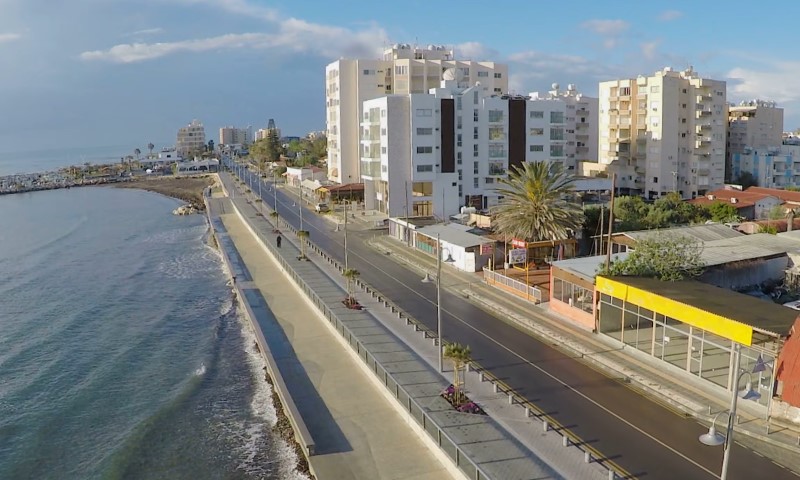
Larnaca is the easiest city to imagine as a normal life rather than a permanent vacation.
It has the sea, cafés, beaches, and Mediterranean pace, yet it also has errands, schools, offices, clinics, and steady local habits.
Finikoudes promenade gives the city its daily pulse.
Residents walk by the water, meet for coffee, swim before lunch, and stay close to shops and apartments.
Mackenzie adds beach bars, restaurants, and shallow family-friendly waters nearby. Kastella offers a calmer beach about a 15-minute walk away.
A newcomer can land in Larnaca and quickly understand why it works.
Airport access, lower costs, sandy beaches, and a central position all support an easy first year in Cyprus.
Why Daily Life Feels Easy Here
Larnaca fits people who want Cyprus to feel convenient.
It is especially useful for remote workers, families, frequent travelers, and expats who want coastal living without a heavy resort rhythm.
Several lifestyle needs align especially well here:
- Remote workers gain lower rents, often 25 to 35% below Limassol.
- Frequent flyers gain airport access roughly 5 to 10 minutes by car.
- Families gain beaches, schools, clinics, and everyday amenities close together.
- Island-wide travelers can usually reach Nicosia and Limassol in under an hour.
- Newcomers gain a steadier year-round rhythm than many resort zones.
Larnaca does not ask residents to choose between beach life and basic convenience. Its value comes through having both.
Who Gets the Most Out of Larnaca
Larnaca’s biggest advantage is practical access.
Larnaca International Airport handles approximately 8.5 million passengers annually and offers frequent year-round flights to Europe and the Middle East.
Daily beach life is also easy. Finikoudes gives residents a long promenade and a simple city beach routine.
Mackenzie adds restaurants, bars, and shallow waters for families. Kastella offers a quieter option close to the center.
Cost comparisons often favor Larnaca. Living costs are estimated at roughly 6% lower than in Paphos, including rent and groceries.
Average residential property prices per square meter vary significantly by district in Cyprus:
- Nicosia: €2,518 per m²
- Limassol: €2,140 per m²
- Paphos: €1,780 per m²
- Larnaca: €1,330 per m²
For buyers who are drawn to Larnaca’s lower property prices and practical coastal lifestyle, Elythera Homes can be a useful starting point for exploring modern steel-frame houses in Cyprus, including catalogue and custom-build options.
Furthermore, cultural and nature details add depth without making daily life complicated.
The Medieval Castle, the Church of St Lazarus, and the Skala district are close to everyday life. Larnaca Salt Lake fills in winter and attracts birdlife, including flamingos.
Where Larnaca Falls Short
Larnaca is balanced, but balance has limits. It is not the strongest city for business networking, nightlife, or dramatic nature.
Professional networks are smaller than in Nicosia or Limassol.
Digital nomad activity exists, but the circle is not as dense as in larger urban centers.
Nature is pleasant, but western Cyprus offers more dramatic coastal and hiking options. Nightlife is steady rather than intense.
People who want luxury, fast career momentum, or a high-energy urban scene may outgrow Larnaca. People who want ease will likely appreciate it.
Paphos is a Scenic, Slower-Paced Expat Haven
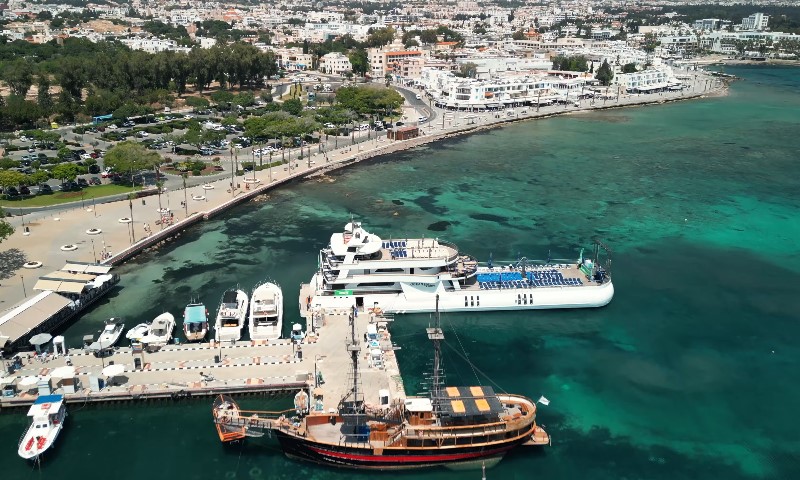
Paphos feels slower before you even compare prices or commute times.
Daily life leans toward sea views, quiet neighborhoods, nature, long lunches, history, and familiar expat circles.
As a UNESCO World Heritage Site, Paphos carries a strong historical identity.
Ancient ruins, archaeological sites, beaches, and mythological places shape how the city feels.
It is more intimate than Larnaca and less urban than Nicosia, which suits people who want calm more than speed.
Paphos is not the most convenient choice for every schedule. Its strength lies in how soft life can feel when you do not need constant movement.
People Who Usually Fit Paphos Best
Paphos fits people who choose lifestyle pace first.
Retirees often feel at home here, especially people connected to the UK who want a warm Mediterranean climate and familiar cultural touchpoints.
Nature lovers also gain a strong base.
Akamas Peninsula, Coral Bay, Lara Beach, wine villages, Troodos routes, and scenic coastal areas make weekends easy to plan.
Several groups tend to gain the most value in Paphos:
- Retirees seeking a slower routine and an established expat circle.
- British and northern European expats who want English-speaking amenities nearby.
- Buyers interested in resort-style homes or holiday rental potential.
- Families who prefer quieter coastal neighborhoods.
- Creatives and entrepreneurs who work better in calm surroundings.
Areas such as Universal, Coral Bay, and Chloraka make the landing easier because many amenities already cater to international residents.
Expat Networks, Nature, History, and Resort Comfort
Paphos’s strongest advantage is social ease for expats.
Newcomers can often find English-speaking amenities, social groups, familiar restaurants, property help, and community circles faster than in many other parts of Cyprus.
Nature access gives Paphos its second major advantage.
Akamas Peninsula includes Cyprus’s largest forested area and offers hiking and nature observation.
Coral Bay gives people white sand and turquoise water. Lara Beach is known for wild sea turtles. Latsi adds pebbly beach scenery about 45 minutes away.
History also shapes daily life. Paphos Castle, Tombs of the Kings, and Paphos Archaeological Park, including Roman villas and well-kept mosaics, add weight to the city’s identity.
Aphrodite’s Rock nearby makes the area one of Cyprus’s most recognizable coastal regions.
Resort-style living is easier to find here than in Larnaca.
Sea-view homes, quiet residential pockets, and visitor-friendly zones create a holiday feeling for people who want daily life to feel gentler.
What Can Make Paphos Less Practical
Paphos can feel too quiet for people who need activity all year. Summer brings more nightlife and tourism, while winter slows down sharply.
Daily beach access can also be less simple than it appears online. Many of the best beach routines require driving to specific spots.
Some coastal areas are rockier than expected, especially for people comparing Paphos with Larnaca’s sandy in-town beaches.
Professionals who need regular travel across Cyprus may also find Paphos less efficient than Larnaca.
Nicosia is a Career, Culture, and Education Capital
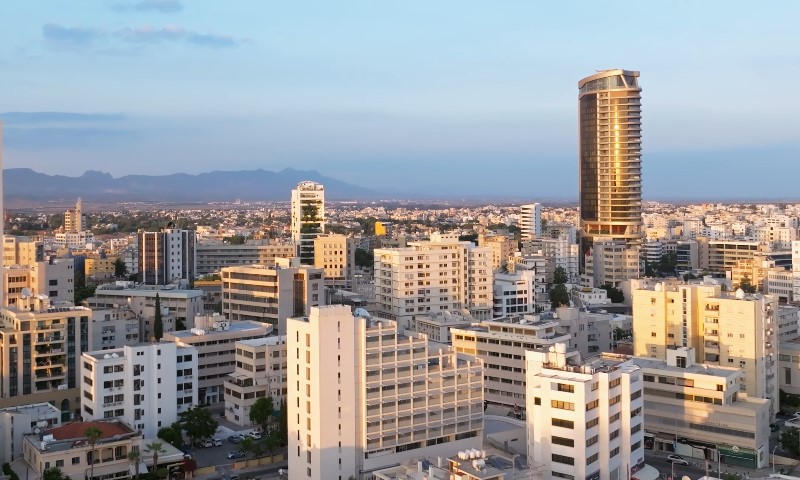
Nicosia is the city for people building a structured life in Cyprus.
It is inland, busy, professional, and focused on institutions rather than beach routines.
No beach sits beside daily life, but offices, universities, hospitals, schools, law firms, banks, cafés, coworking spaces, museums, and theaters do.
For people moving for work, study, family needs, or long-term professional plans, Nicosia can make more sense than a coastal city.
Economic conditions also support the idea that Cyprus, especially Nicosia, is not only a lifestyle destination.
GDP grew by 3.0% year on year in Q1 2025, while:
- Information and communication rose 5.3%
- Construction rose 4.1%
- Trade, transport, accommodation, and food services rose 3.9%
For people choosing Nicosia, that matters because the capital is where much of the professional and institutional activity is concentrated.
People Who Need the Capital Most
Nicosia fits people whose life in Cyprus depends on access.
That includes professionals, students, academics, families, and expats who want city routines more than beach routines.
Several profiles point naturally toward the capital:
- Professionals in government, law, finance, banking, consulting, education, administration, and corporate work.
- Students connected to the University of Cyprus or other academic institutions.
- Families prioritizing international school options.
- Digital nomads who want coworking, cafés, and urban energy.
- Expats who value museums, theater, old-town life, and networking.
Ministries, public bodies, courts, law firms, banks, audit firms, consulting firms, universities, and professional offices are concentrated in Nicosia.
Jobs, Schools, Hospitals, and City Infrastructure
Nicosia’s strongest advantage is concentration.
Jobs, institutions, schools, hospitals, and professional networks sit closer together here than in Larnaca or Paphos.
Education options are stronger too.
Notable choices include:
Healthcare access is another major advantage. Nicosia has a leading public and private hospital network.
Nicosia General Hospital is described as the country’s largest public hospital, with about 450 beds and over 350 doctors.
Central neighborhoods can support more walking and bus use than many parts of Cyprus.
Nicosia has the strongest bus coverage among these cities, although daily comfort still depends on the neighborhood and commute pattern.
What You Give Up by Living Inland
Nicosia’s cost is not only financial. Its main price is giving up daily beach life.
The nearest sea access is about 40 km away, or roughly 30 to 40 minutes by car.
Summer heat can feel stronger because the city lacks a coastal breeze.
Traffic can also be frustrating, especially during rush hour. Bus coverage is relatively dense, but delays happen because dedicated bus lanes are limited.
Nicosia also has a smaller English-speaking expat circle than coastal hubs. People who want an easy social landing may need more time.
For seaside atmosphere, Larnaca and Paphos feel closer to the Cyprus many people picture. For real-life structure, Nicosia often wins.
FAQs
Closing Thoughts
A good city choice starts with honesty about daily life.
Do you want Cyprus as a beach escape, a peaceful retirement base, or a serious long-term professional home?
It is the one that makes your ordinary Tuesday feel right.
