


 Alek

A little blood in your saliva, a sore jaw, and some swelling are all expected after a tooth extraction. However, severe pain that starts several days later, bleeding that refuses to stop, or swelling that keeps getting worse may indicate a problem.
Recovery also depends on what happens during the first 24 hours. Rinsing too aggressively, smoking, or returning to strenuous exercise too soon can disturb the blood clot protecting the wound.
There are plenty of myths about tooth extraction recovery, including claims that every painful socket is infected or that bleeding should stop completely within minutes. Knowing what actually happens during healing helps you recognize symptoms that need professional attention.
What Is Normal During the First Few Days After a Tooth Extraction?
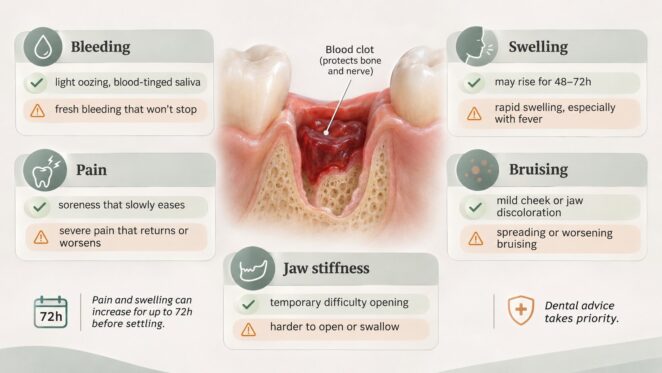
Once a tooth is removed, a blood clot forms inside the empty socket. The clot protects the underlying bone and nerves as the surrounding tissue begins to heal.
The first few days can be uncomfortable, especially after surgical removal of a wisdom tooth. Pain, swelling, tenderness, and minor bleeding are expected, although their intensity varies.
| Symptom | What Is Usually Normal? | When to Be Concerned |
| Bleeding | Light oozing and blood-stained saliva during the first day | Persistent fresh bleeding that does not respond to pressure |
| Pain | Soreness that gradually improves over several days | Severe pain that appears or worsens after initial improvement |
| Swelling | Swelling that may increase during the first 48 to 72 hours | Rapidly worsening swelling, especially with fever |
| Bruising | Mild discoloration around the jaw or cheek | Extensive or worsening bruising accompanied by other concerning symptoms |
| Jaw stiffness | Temporary difficulty opening the mouth after a difficult extraction | Increasing difficulty opening the mouth or swallowing |
According to University College London Hospitals, pain and swelling can increase during the first 72 hours after dental surgery before beginning to settle.
A surgical extraction may require a longer recovery than removing a loose or uncomplicated tooth. The dentist’s specific instructions should always take priority.
How Much Bleeding Is Normal After a Tooth Extraction?
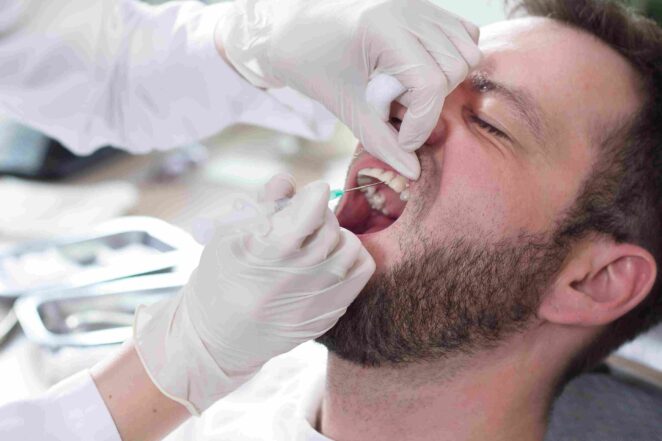
Seeing red saliva after an extraction can be alarming. A small amount of blood can color a surprising amount of saliva, making minor bleeding look more serious than it actually is.
Light oozing during the first 24 hours is generally expected. Small traces of blood may also appear afterward, particularly if the healing area has been disturbed.
Fresh blood flowing continuously from the socket is a different situation. Persistent bleeding, repeated soaking of gauze, and blood collecting in the mouth are among the warning signs discussed in the explanation of the case when bleeding after a tooth extraction becomes abnormal.
If bleeding starts again, place a clean, slightly damp gauze pad directly over the socket and bite down firmly for 20 to 30 minutes without repeatedly removing it to inspect the wound. Remain seated upright during that time.
Contact your dentist promptly if bleeding continues despite sustained pressure. Heavy bleeding that cannot be controlled, especially with dizziness, weakness, or fainting, requires emergency medical care.
If you take blood-thinning medication, tell your dentist about it. Do not stop prescribed medication on your own to control bleeding.
Common Myths About Tooth Extraction Recovery
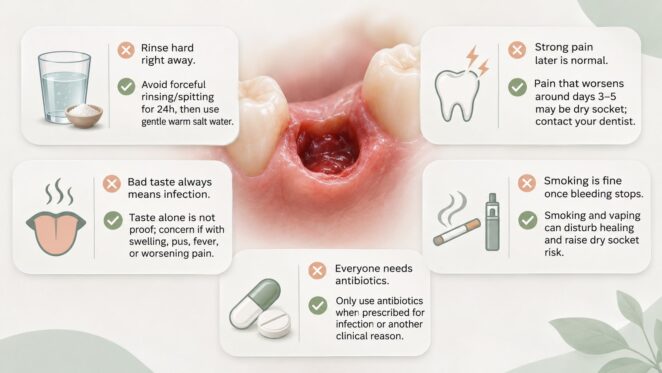
Myth 1. You Should Rinse Your Mouth Immediately to Keep the Wound Clean
Vigorous rinsing immediately after extraction can disturb the newly formed blood clot and restart bleeding.
For the first 24 hours, dentists generally advise avoiding forceful rinsing and spitting. After that initial period, gentle rinsing with warm salt water can help keep the area clean.
There is no need to swish forcefully. Allow the water to move gently around your mouth and avoid putting pressure on the extraction site.
Myth 2. Severe Pain Several Days Later Is Just Part of Healing
Some discomfort is expected after an extraction, but pain should eventually improve. A sudden increase in pain around the third to fifth day deserves attention.
One possible cause is dry socket, a condition that develops when the protective blood clot is lost or fails to remain in place. The underlying bone becomes exposed, causing intense pain that may spread toward the ear or jaw.
The American Dental Association explains dry socket and describes treatment that may include cleaning the socket and placing a medicated dressing.
If your pain becomes significantly worse several days after the procedure, contact your dentist rather than trying to manage it indefinitely with painkillers.
Myth 3. Every Unpleasant Taste Means You Have an Infection
A metallic taste during the first day may simply come from small amounts of blood mixing with saliva.
An unpleasant taste alone does not establish that the socket is infected. However, a persistent foul taste accompanied by increasing pain, swelling, pus, or fever needs a dental examination.
Dry socket can also cause unpleasant breath or taste without necessarily being a bacterial infection. A dentist needs to examine the area to identify the cause.
Myth 4. Smoking Is Harmless Once the Bleeding Stops
Smoking can interfere with healing even after visible bleeding has ended. Tobacco smoke and the suction involved in smoking can affect the extraction site and increase the risk of dry socket.
Vaping is not a safe substitute during the immediate recovery period either. Follow the restrictions provided by your dentist, which may be longer after complicated extractions.
Myth 5. Antibiotics Are Necessary After Every Extraction
Many uncomplicated tooth extractions heal without antibiotic treatment.
A dentist may prescribe antibiotics when there is an established infection or another clinical reason. Taking leftover antibiotics without an examination is not an appropriate way to treat soreness or suspected dry socket.
If antibiotics have been prescribed, follow the instructions supplied with the medication and contact your healthcare professional if you experience a possible adverse reaction.
What Should You Eat After a Tooth Extraction?

Eating can be awkward during the first day, especially when the local anesthetic has not fully worn off. Hot food presents an additional risk because numb lips and cheeks are easier to burn or bite accidentally.
- Mashed potatoes
- Scrambled eggs
- Yogurt without hard toppings
- Soft pasta
- Lukewarm soup
- Mashed banana
People following a plant-based diet can also choose soft, protein-rich options such as mashed lentils and silken tofu.
Very hot meals, crunchy snacks, and foods with small hard pieces may irritate the extraction site. Chewing on the opposite side of the mouth also reduces direct pressure on the wound.
Avoid drinking through a straw during the initial healing period. The suction can disturb the clot, especially soon after surgery.
As discomfort improves, firmer foods can gradually return to your meals. There is no universal day when everyone must resume a normal diet.
When Can You Brush Your Teeth Again?
Oral hygiene remains important after an extraction. Leaving the rest of your mouth unclean for several days can create additional problems.
You can generally continue cleaning unaffected teeth, taking care not to brush directly into the fresh socket. The area around the extraction needs a gentler approach until the dentist says normal cleaning can resume.
If you are considering cosmetic procedures such as dental veneers, discuss the appropriate timing with your dentist once the extraction site has healed.
After the first 24 hours, gentle warm salt water rinses are commonly advised. The exact frequency and duration depend on the procedure and the instructions provided by your dental team.
Avoid using sharp objects, fingers, or your tongue to investigate the socket. A healing wound does not need to be touched repeatedly to check its progress.
How Long Does the Empty Tooth Socket Take to Heal?
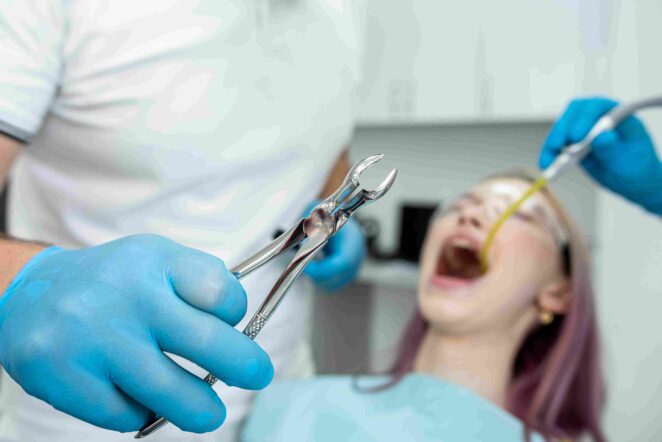
Healing happens in stages. The initial blood clot develops soon after extraction, followed by gradual repair of the gum and deeper tissues.
Many people notice that pain and swelling have improved substantially within a week. The opening in the gum takes longer to close, and the underlying bone continues changing after the surface looks healed.
MedlinePlus explains the recovery process and notes that the socket may take one to two weeks to heal, with bone and surrounding tissues requiring additional time.
The size of the tooth, the condition of the surrounding bone, and the complexity of the extraction all influence recovery. A surgically removed wisdom tooth can leave a deeper wound than a straightforward extraction.
Stitches do not necessarily indicate a complication. Dentists sometimes place dissolvable sutures to help the gum heal after surgery, and their disappearance can take days or weeks depending on the material.
When Should You Call a Dentist After a Tooth Extraction?
You do not need to wait for symptoms to become unbearable before contacting your dental practice. Changes in pain, bleeding, and swelling can provide important information about healing.
- Bleeding that continues after sustained pressure with clean gauze
- Severe pain that becomes worse several days after extraction
- Increasing swelling after the first few days
- Fever, pus, or other signs of infection
- A persistent unpleasant taste accompanied by significant pain
- Difficulty opening your mouth that is getting progressively worse
Seek emergency medical attention immediately if you experience difficulty breathing or swallowing, rapidly spreading swelling affecting your airway, uncontrolled heavy bleeding, or fainting.
If you are taking anticoagulants or have a diagnosed bleeding disorder, contact your dental team promptly about bleeding that is difficult to control.
What About Exercise, Work, and Everyday Activities?

Even a straightforward extraction leaves a fresh wound. Heavy lifting, strenuous exercise, and physically demanding work can increase the chance of renewed bleeding during the early recovery period.
Most routine aftercare instructions advise avoiding strenuous activity for at least the first 24 hours. More extensive oral surgery may require a longer break.
If your job involves physical labor, discuss the timing of your return with the dentist before leaving the clinic.
Desk work and other light activities may be manageable sooner, provided you feel well and are no longer affected by sedation or other medication that impairs alertness.
After sedation, follow the specific restrictions on driving, operating machinery, and making important decisions.
